Welcome to the Soul of the Room: How Japanese 'Yohkoso' Energy Is Quietly Redefining American Hospitality
There's a moment — you've probably felt it — when you walk into a place and something just settles. The air feels right. Nobody has done anything dramatic. There's no confetti, no overly enthusiastic greeter with a tablet. And yet you feel, unmistakably, that you were expected. That you were wanted.
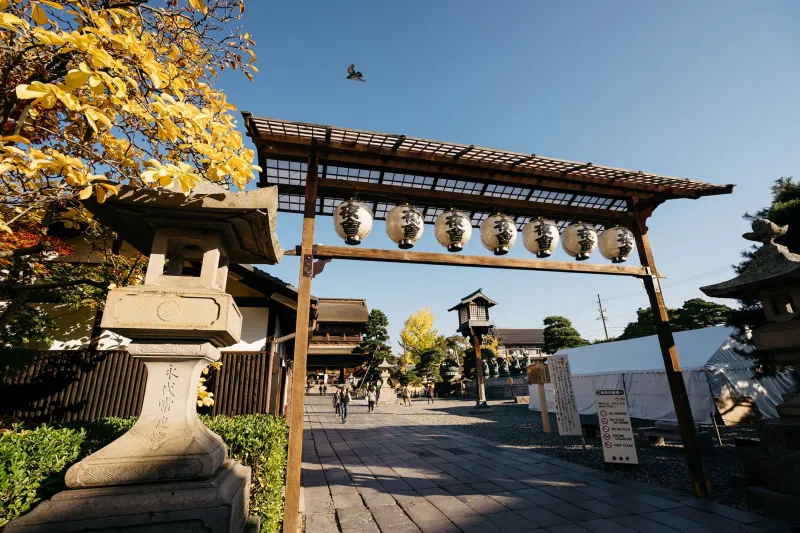
In Japan, that feeling has a name — or at least a spirit behind it. The word yohkoso (ようこそ) translates loosely as "welcome," but that translation does it a quiet injustice. In the context of Shinto belief and traditional Japanese hospitality culture, yohkoso carries a deeper current: the idea that welcoming a guest is a spiritual act, one that acknowledges the kami — the divine energy — present in every person who crosses your threshold.
And here's the thing: American hospitality entrepreneurs are starting to take notes.
Beyond "How Many in Your Party?"
American customer service culture is famously enthusiastic. We're trained to smile wide, use first names, upsell the appetizers, and check back every four minutes. It's not insincere — it's just loud. The underlying message is often transactional: we're glad you're here because you're a customer.
Yohkoso energy operates from a completely different premise. It starts before the guest arrives. In traditional Japanese omotenashi — the broader hospitality philosophy that yohkoso feeds into — preparation is the truest form of welcome. You don't wait for someone to ask for something. You anticipate. You create conditions in which a guest never has to feel awkward, rushed, or invisible.
The kami, in Shinto cosmology, inhabit everything — doorways, hearths, rivers, and yes, the space between a host and a guest. To welcome someone with genuine yohkoso energy is to honor that spiritual presence. It's not performance. It's acknowledgment.
The Entrepreneurs Paying Attention
In Portland, Oregon, a small boutique inn called Mori House has been quietly overhauling its guest experience over the past two years. The owner, who spent time living in Kyoto before opening the property, describes the shift as "unlearning urgency."
"American hospitality rushes to fill silence," she explains. "A guest sits down and within thirty seconds someone is at the table. In Japan, I noticed that the best experiences had space in them. The welcome was in the preparation — the folded towel, the single branch of seasonal flowers, the tea that arrived exactly when you were ready for it. Nobody had to ask."
She started training her staff not on scripts, but on reading a room — a skill that sounds obvious but is surprisingly rare. The check-ins got quieter. The rooms got more intentional. And repeat bookings went up by nearly 40 percent in the first year.
Similar experiments are happening in food and beverage. A ramen shop in Chicago's Logan Square neighborhood redesigned its entry experience after the owner became fascinated with the Japanese concept of ma — the meaningful use of negative space. The hostess stand was removed. Guests are now greeted at the door with a brief bow and a hand gesture toward the room. No clipboard, no buzzers, no "it'll be about twenty minutes." Just presence.
"People either love it or it confuses them at first," the owner laughs. "But the ones who get it — they come back every week."
What the Kami Have to Do With It
You don't have to be Shinto to feel the logic here. But understanding where yohkoso energy comes from makes the philosophy stickier and more coherent than a simple "be nicer" directive.
In Japanese folk belief, kami aren't distant gods on thrones. They're woven into the fabric of everyday life — present in the grain of a wooden table, in the steam rising from a bowl of broth, in the act of opening a door for someone. When a host prepares a space with genuine care, they're not just being polite. They're creating conditions for something sacred to occur: the meeting of two beings, each carrying their own divine spark.
This is why the details matter so much in traditional Japanese hospitality. The kakejiku (hanging scroll) in a tea room is changed with the season. The temperature of the water for your hand towel is calibrated. The angle of the light has been considered. None of this is accident, and none of it is for the host's benefit. It's all for you.
American hospitality culture, by contrast, often optimizes for efficiency of service rather than quality of presence. The guest is the recipient of a process. In yohkoso culture, the guest is the reason the process exists at all — and that's a subtle but transformative distinction.
Practical Yohkoso: What It Actually Looks Like
So what does adopting yohkoso energy actually look like for an American small business owner who isn't running a boutique inn or a ramen shop?
A few patterns show up consistently among entrepreneurs who've gone down this road:
Preparation over reaction. Instead of responding to guest needs as they arise, anticipate them. If you run a hair salon, have water and a charging cable available before anyone asks. If you run a retail shop, make sure the dressing room is clean and well-lit before the first customer walks in.
Silence as welcome. Not every moment needs to be filled with conversation or background music cranked up to eleven. Comfortable quiet is itself a form of respect.
Seasonal awareness. Japanese hospitality is deeply tied to the seasons — kisetsukan, or seasonal feeling. Even something as simple as a small arrangement of fall leaves near the entrance of a coffee shop signals that the space is alive and paying attention.
Threshold moments. In Japan, the entryway — the genkan — is treated as a sacred transition space. The moment a guest crosses into your space deserves acknowledgment, not just processing.
The Village Welcomes You
At Inari Village, we spend a lot of time thinking about what it means to build community — real community, the kind that feels like home rather than a transaction. The Japanese concept of yohkoso gets at something essential: that welcome is not a service feature. It's a spiritual commitment.
When the kami are treated as guests in your space — when you prepare as though something sacred is about to happen — guests feel it. They can't always name it. But they come back.
And maybe that's the whole point.