The Demon in Your Living Room: Unpacking the Bakeneko Legend Behind Every 'My Cat Is Plotting Against Me' Meme
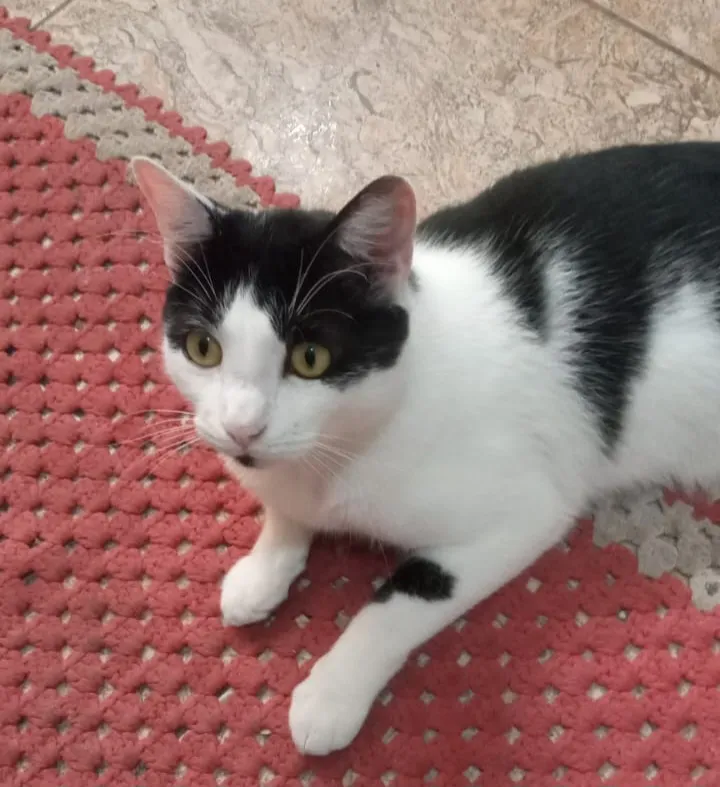
Photo: Isabele Pedigoni, CC0, via Wikimedia Commons
There's a genre of tweet you've seen a hundred times: a photo of a cat sitting perfectly still, staring at a blank wall, captioned something like 'he knows what he did' or 'she's been like this since Tuesday.' The comments pile up with jokes about the cat's secret life, its ancient grudges, its plans for us all.
We speak about cats online as if they're small, furry demons renting space in our homes. And here's the thing: that's not a modern joke. That's a four-hundred-year-old Japanese folk belief, and it has a name — the bakeneko.
What Exactly Is a Bakeneko?
In Japanese folklore, bakeneko (化け猫, 'changed cat' or 'monster cat') is a cat that has lived long enough — or grown large enough — to gain supernatural powers. Related to the nekomata, the two-tailed cat yokai of older legends, the bakeneko was said to be able to:
- Walk on its hind legs
- Speak human language
- Shapeshift into people, often the very owner whose home it haunted
- Dance at night with a towel on its head (we are not making this up)
- Curse, possess, or outright kill the humans who wronged it
Why cats? Edo-period Japan (1603–1868) had practical reasons to be nervous. Cats guarded silkworm farms from rats — valuable animals — but legends warned that if a cat killed and ate a prized silkworm moth or a lamp oil (then made of fish oil), it might transform. Long-lived pets were suspected of becoming yokai across the board; cats just did it with the most style.
The most chilling folk belief: a bakeneko might kill its owner and take their place, living in the house wearing their shape. Imagine coming home and having a nagging feeling that the person in your kitchen is not quite your mother. Now imagine the cat watching you from the windowsill, tail flicking. That's the vibe.
From Edo Superstition to Edo-Era Content
Like all good folklore, the bakeneko escaped the villages and became entertainment. Kabuki plays featured monstrous cats. Edo-period woodblock artists like Utagawa Kuniyoshi drew dancing cats and cat-spirit scenes with obvious delight — some of his prints of anthropomorphic cats are basically proto-memes, cats behaving like humans for comedic effect, sold as popular art.
Notice the pattern? The moment cats were imagined as uncanny, humans couldn't stop making content about it. The bakeneko wasn't just a fear. It was a franchise.
The Modern Bakeneko Is a Meme
Now trace the line forward. Every corner of internet cat culture carries bakeneko fingerprints:
- 'My cat is plotting against me' — the classic bakeneko suspicion, updated for group chats. The joke only works because we half-believe it.
- Loaf position, staring at nothing — folklore would call that seeing spirits. The internet calls it 'goblin mode.' Same cat, same energy.
- Neko Atsume, the Japanese mobile game about collecting cats in your yard, and its descendants — cats as mysterious little visitors who owe you nothing. Very bakeneko-adjacent: the cat is a guest, and guests in Japanese folklore are often not what they seem.
- Anime and games, from the fortune-cat maneki-neko imagery to full-on yokai cat characters, keep the 'cat as otherworldly being' trope on life support — happily.
Even our language betrays the old belief. We say cats 'own' our homes. We apologize to them. We describe their stares as judgment. No other pet gets this treatment — nobody jokes that their goldfish is cursed.
Why the Legend Still Fits
Here's our theory at Inari Village: the bakeneko myth endures because it's a remarkably accurate description of the human-cat relationship, dressed in supernatural clothing.
Cats do behave like beings with a hidden interior life. They're independent in a way dogs aren't. They watch things we can't see. They appear and vanish. They show affection on their own terms, which humans — a species that loves transactional loyalty — find faintly alarming. Edo-period villagers solved the mystery by giving cats a secret nature: they're monsters in disguise. Internet culture solved it the same way, minus the pitchforks.
Both eras arrived at the same conclusion: the cat is a roommate with a past you'll never know.
Meet Your Own Bakeneko
You don't need a shrine or a folklore degree to play with this tradition. A few ideas for the bakeneko-curious American cat household:
- Learn your cat's 'age' in yokai years. Folklore said cats transformed after living 13 years or reaching a certain size. If your cat is a senior, congratulations — you may be living with a bakeneko. Respect increases accordingly.
- Watch a bakeneko story. Kaneto Shindo's 1968 film Kuroneko is a haunting, gorgeous take on vengeful cat spirits. Pair it with any studio Ghibli cat feature for the friendlier end of the spectrum.
- Apologize formally. Folklore held that wronged cats held grudges. Did you move the litter box? Skip the treat schedule? A spoken apology costs nothing. The cat will ignore it, which is also very traditional.
- Tell the story. The bakeneko survived because people retold it. Post the staring-at-the-wall photo. Add the caption. You're not just making a meme — you're keeping a four-century-old folk tradition alive, one shitpost at a time.
The bakeneko legend was never really about monsters. It was about the delicious suspicion that the animal in our home understands everything and explains nothing. Edo villagers whispered it. We post it. Your cat, presumably, has read both versions — and remains unimpressed.