Tiny Prizes, Big Feelings: Why American Collectors Can't Stop Feeding the Capsule Machine
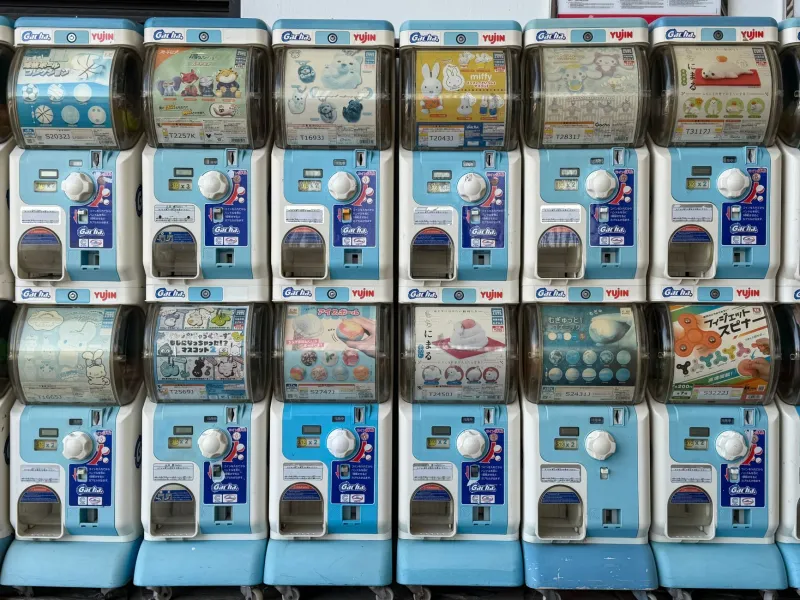
There's a sound you learn to recognize before you learn what it means: the soft clunk-clunk-rattle of a capsule dropping into the tray. In Tokyo, that sound is everywhere. In Austin, Texas, it's now everywhere too — tucked between the vintage video games at a comic shop, humming politely outside a boba tea place, glowing in a dedicated gacha boutique where grown adults negotiate trades like it's the NYSE.
Gashapon — Japan's capsule toy culture, named for the gacha-gacha crank sound and the pon of the prize — has landed in America, and it's not a phase.
The Tiny Surprise That Rewires Your Brain
Let's be honest about what's happening here. A gashapon capsule is a $3–$5 mystery in a plastic shell. You don't choose your figure. You choose your odds. The machine's display case shows you the full set — maybe eight tiny capybaras in tiny hats — and you roll the dice hoping for the one wearing the sombrero.
Psychologists have a term for this: variable reward. It's the same loop that makes slot machines and loot boxes compelling, except gashapon has a crucial difference. The stakes are a few dollars, the prize is genuinely cute, and there's no app nudging you to spend more. It's gambling with the danger sanded off. The worst-case scenario is you own a duplicate tiny frog.
There's also something almost Shinto-adjacent about it, if you squint. Each capsule is a little sealed vessel. You don't know what spirit — er, figure — lives inside until you crack it open. Inari Village readers will appreciate the ritual: the crank, the rattle, the reveal. It's a tiny fox-fire moment in a food court.
The Collector Economy Is Very Real
Here's where it gets serious. Rare gashapon figures — discontinued sets, regional exclusives, chase variants — trade online for eye-watering prices. A 2015-era set of miniature Japanese vending machine replicas? Hundreds of dollars. A certain glowing-eyed cat figure from a limited run? Don't ask. eBay and Mercari listings for "gashapon lot" have become their own ecosystem, and American collector communities on Discord and Reddit track release calendars from Bandai and Takara Tomy like stock analysts.
The smart move, veterans will tell you, is to collect what you love, not what you think will appreciate. The secondary market is fickle; the joy of a shelf full of tiny snack-food-shaped erasers is not.
Building Your First Collection Without Losing Your Mind
New to the crank? Here's your starter path:
- Pick one theme, not one brand. Miniature food, tiny animals, desk gadgets — a theme keeps your collection coherent and your wallet intact.
- Set a per-visit budget. The machine wins when you "just do one more."
- Learn the set list. Most machines display all possible prizes. Knowing the lineup makes duplicates less painful and trades more strategic.
- Keep the capsules. Half the charm is the shells. Crafters turn them into terrariums, ornaments, and tiny dioramas.
- Find your people. Local anime clubs, conventions, and yes, dedicated gacha shops, all host trades. This is village behavior.
No Machine in Your Town? Lobby For One.
Gashapon distributors actively expand into US markets, and small businesses are hungry for low-maintenance, high-charm attractions. A polite email to your local comic shop or mall management — mentioning the popularity of Japanese capsule boutiques in cities like Los Angeles, Seattle, and New York — genuinely works. Worst case, you've planted a seed. Best case, you're the person who brought the oracle to the village.
And when that first capsule drops? Pon. You're welcome.