Tom Nook Is Just the Beginning: The Wild Mythology Behind Japan's Beloved Shapeshifting Raccoon Dog
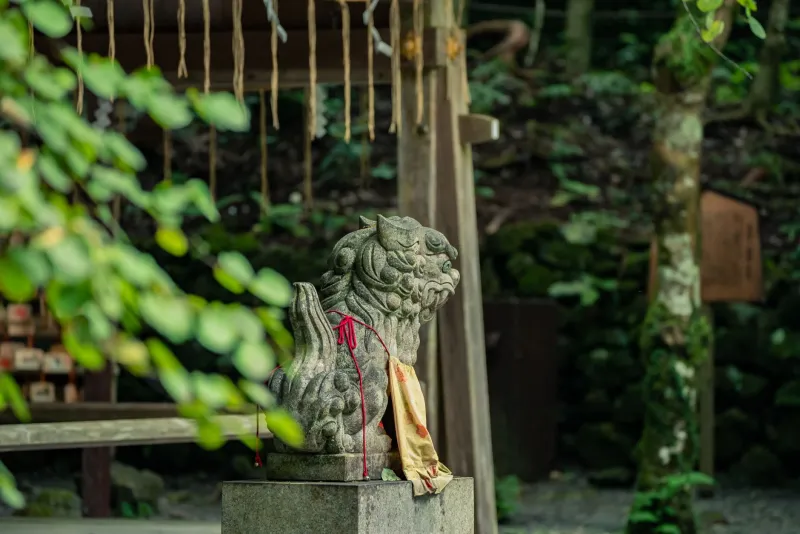
Let's be honest: most Americans who know the name "tanuki" learned it from a cheerful, leaf-wearing raccoon dog charging them bells for a mortgage in Animal Crossing. Maybe you caught Pom Poko on a late-night Ghibli binge and came away with vague memories of raccoon dogs drumming on their own bellies and transforming into buses. Either way, there's a solid chance you've absorbed the tanuki into your pop culture vocabulary without fully knowing what you actually invited in.
That's kind of perfect, actually. Because in Japanese mythology, the tanuki has always worked exactly that way — slipping into your life sideways, wearing a borrowed face, and leaving you a little richer (or a little confused) before you've figured out what happened.
So What Even Is a Tanuki?
First, a quick reality check: tanuki are real animals. Nyctereutes procyonoides, the raccoon dog, is a canid native to East Asia with a stocky build, a masked face, and an almost comically round silhouette when it's fattening up for winter. They're genuinely adorable. They also have essentially nothing to do with raccoons, despite looking like nature tried to combine the two and ran out of ambition halfway through.
In Japan, the real animal and the mythological creature have been entangled for centuries. The folkloric tanuki — the one that matters for our purposes — is a yokai, a supernatural entity with the power to shapeshift, brew illusions, and manipulate fortune. Unlike many yokai, which trend toward sinister or tragic, the tanuki leans heavily chaotic-neutral. It's a trickster, yes, but one whose pranks are usually more absurd than malicious. Think less "cursed spirit" and more "your weird uncle who somehow always has cash and a great story."
The Belly Drum, the Big Hat, and the Sake Jug
If you've ever seen a ceramic tanuki statue outside a Japanese restaurant or shop — and if you live in a city with any kind of Japanese neighborhood, you almost certainly have — you've already met the iconographic version. These statues, called tanuki-yaki or simply tanuki-zō, typically show the creature standing upright, wearing a wide straw hat, clutching a bottle of sake, and sporting a massively oversized... let's say midsection. The belly is often shown mid-drum-beat, a reference to the tanuki's mythological ability to pound its stomach like a drum to create hypnotic sounds that lure travelers off the path.
Each element of the statue carries symbolic weight. The hat shields against bad luck. The sake jug represents virtue and hospitality. The big belly signals bold confidence and a generous spirit. These aren't random design choices — they're a folk grammar, a shorthand that Japanese merchants and homeowners have used for generations to invite prosperity and good humor into a space.
The belly drumming itself is one of the more genuinely ancient pieces of the mythology, referenced in texts going back to the Heian period. There's something almost primal about it — a creature drumming its own body in the dark forest, creating a sound that doesn't quite belong to the natural world. Travelers in old Japan reportedly heard the ponpoko sound echoing through mountain passes at night and knew they were in tanuki territory.
Shapeshifting as a Spiritual Concept
Here's where the tanuki mythology gets genuinely interesting, especially if you're used to Western trickster figures. In Japanese folk belief, the ability to transform — henge — wasn't just a magic trick. It was a sign of spiritual power and accumulated wisdom. The kitsune (fox spirit) is the most famous practitioner of this art, but the tanuki holds its own, particularly in stories where it disguises itself as a Buddhist monk, a teakettle, or even a human being living a completely ordinary life.
What separates the tanuki from the kitsune, culturally speaking, is tone. Fox spirits in Japanese mythology can be genuinely dangerous — seductive, calculating, capable of possessing humans and driving them to ruin. The tanuki is more likely to transform into a boulder just to scare a passing merchant and then dissolve into laughter. There's warmth to the tanuki's chaos. It's the difference between a con artist and a class clown.
That warmth is also why the tanuki became associated with abundance and commercial luck rather than fear. While kitsune shrines (inari shrines, interestingly enough) dot the Japanese countryside as sites of serious spiritual devotion, tanuki statues ended up in front of restaurants and shops — places of welcome, transaction, and good feeling.
How America Got the Tanuki (And Mostly Missed the Point)
The tanuki's journey into American pop culture is a masterclass in how mythology travels. It almost always arrives stripped of context, wearing a costume the new audience can recognize.
Tom Nook is the clearest example. Nintendo's beloved shopkeeper-turned-real-estate-mogul has a name that literally translates from Japanese as "raccoon dog" (tanuki), a design that echoes the round, hat-adjacent iconography of the classic statues, and a personality built around commerce, generosity with strings attached, and a certain cheerful inscrutability. American players latched onto him as either a wholesome small-business owner or a capitalist villain, depending on their mood — completely missing, or simply not knowing, that his archetype in Japanese culture is the folk spirit who blesses your shop with good fortune.
Studio Ghibli's Pom Poko (1994) is the rare case where American audiences actually got a fairly direct transmission of tanuki mythology — the shapeshifting, the belly drumming, the spiritual stakes — and it remains one of the most underappreciated films in Ghibli's catalog, possibly because it's genuinely weird and doesn't soften its folklore for export. The tanuki in that film aren't cute sidekicks. They're beings with a deep, sorrowful connection to a landscape being erased.
Nintendo also gave Western players the Tanooki Suit in Super Mario Bros. 3, a power-up that let Mario transform and fly — a direct nod to the shapeshifting mythology, though most kids in 1990 just thought it looked funny.
Why the Tanuki Keeps Winning
There's something about the tanuki archetype that maps surprisingly well onto American sensibilities — maybe more than the creators originally intended. The self-made trickster who turns abundance out of nothing, the creature who wears a dozen faces but somehow remains fundamentally itself, the spirit who'd rather share a drink with you than demand your reverence: these qualities translate.
America has always had a soft spot for the lovable rogue, the con man with a heart of gold, the entrepreneur whose methods are questionable but whose intentions are basically fine. The tanuki has been playing that role in Japanese culture for a thousand years. It just took a leaf-covered mortgage broker and a belly drum to help us recognize it.
Next time you're wandering through a Japanese neighborhood and you spot one of those ceramic statues outside a restaurant — wide hat, sake jug, enormous grin — take a second look. That's not just decor. That's an invitation from one of mythology's most underrated spirits, and it's been waiting a very long time for you to notice it was there.