Forest Gods and Healing Rituals: How Shinto Spirituality Found a Home in American Wellness
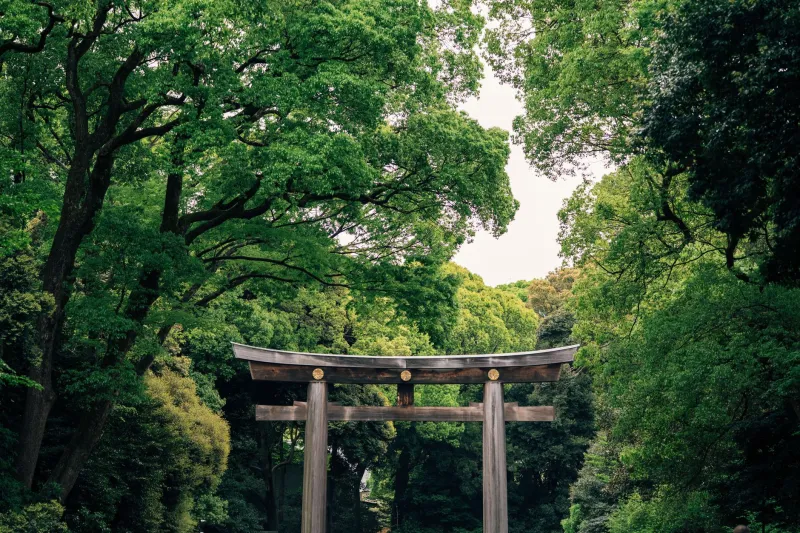
Something unexpected is happening in yoga studios, hiking trails, and wellness retreats across the United States. Between the sound baths and the cold plunges, a quieter influence has been slipping in — one that traces its roots back thousands of years to the misty forests and sacred shrines of ancient Japan.
Shinto, Japan's oldest spiritual tradition, isn't a religion in the Western sense. There's no central doctrine, no single holy text, and no missionary impulse. At its heart, it's a way of recognizing that the world is alive with spirit. Every mountain, every river, every old gnarled tree might house a kami — a divine presence or spiritual essence that deserves acknowledgment and respect. It's a worldview that feels, to many burned-out Americans, like a long-overdue exhale.
What Even Is a Kami?
The word kami gets translated as "god" or "spirit," but neither quite captures it. Think less "deity on a throne" and more "the feeling you get standing at the edge of the Grand Canyon." That overwhelming sense that something larger than yourself is present — Shinto would say that is the kami.
Kami exist in nature, in ancestors, in places, and even in exceptional human beings. Shrines (jinja) across Japan are built not to contain kami, but to mark where they dwell — a sacred tree wrapped in rope, a mountain peak, a waterfall that's been flowing for centuries. The practice of approaching these spaces with gratitude, mindfulness, and a certain humility is baked into everyday Japanese life in ways that many Americans are only now discovering.
For wellness practitioners stateside, this framework offers something that conventional mindfulness often lacks: a sense of the sacred that doesn't require any particular religious belief.
Shinrin-Yoku Goes Mainstream — But Where Did It Come From?
If you've heard of "forest bathing," you've already brushed up against Japanese spiritual ecology. Shinrin-yoku, literally "absorbing the forest atmosphere," was developed in Japan in the 1980s as a public health initiative. But its roots run much deeper into Shinto's reverence for sacred groves and the spirits believed to inhabit them.
Today, certified forest therapy guides operate in nearly every U.S. state. Organizations like the Association of Nature and Forest Therapy have trained hundreds of guides, and many of them are deliberately studying the Shinto context that gave birth to the practice.
"When I learned that the forests I was guiding people through might have been considered chinju no mori — guardian forests — in another culture, it changed how I held the space," says one Pacific Northwest-based forest therapy guide who has spent time studying in Japan. "It gave the work a kind of gravity it didn't have before."
The health data backs up the experience. Studies have shown that time in forested environments lowers cortisol, reduces blood pressure, and improves mood. But practitioners who approach it through a Shinto-adjacent lens argue that the why matters too — that treating a forest as a living, spirited entity rather than a pleasant backdrop changes the quality of the attention you bring.
Mononoke, Mindfulness, and the Things We Don't Name
Anyone who grew up watching Studio Ghibli films has met mononoke — the restless, sometimes troublesome spirits that inhabit the natural world when it's been disturbed or disrespected. In Princess Mononoke, the forest god's pain becomes a kind of ecological grief made visible.
Some American therapists and somatic healers are drawing on this concept — not literally, but as a metaphorical framework for what happens when humans lose their connection to the natural world. The idea that unacknowledged forces (grief, trauma, environmental disconnection) can manifest as a kind of spiritual turbulence resonates across cultures.
"I don't tell my clients they have a mononoke," laughs one somatic therapist based in Asheville, North Carolina, who studied Japanese folklore alongside her clinical training. "But the idea that there are forces in and around us that need to be seen before they can settle — that's incredibly useful therapeutically. It's a very old idea dressed in new language."
The Appropriation Question — And Why It Matters Here
It would be dishonest to write about Western wellness borrowing from Shinto without addressing the tension that comes with it. Japan's spiritual traditions aren't a menu item. They exist within a living culture, practiced by real communities, and the history of Western wellness has a complicated track record of extracting what feels useful while discarding the context.
Many thoughtful practitioners are aware of this. The difference, they argue, lies in approach. Crediting sources explicitly, studying deeply rather than skimming aesthetics, supporting Japanese-owned businesses and educators, and maintaining humility about what you don't know — these aren't just ethical boxes to check. They're actually more consistent with Shinto's own values of gratitude and reciprocity.
Japanese American cultural educators have pointed out that there's a meaningful difference between inspiration and appropriation — and that the line runs through respect, attribution, and a willingness to keep learning. Several wellness centers around the U.S. now partner directly with Japanese cultural organizations or bring in Japanese American educators to provide context for their programs.
How to Bring This Into Your Own Life
You don't need a retreat booking or a certified guide to start exploring these ideas. Shinto's everyday practice is actually quite accessible — it's built around small, consistent acts of acknowledgment rather than grand ceremonies.
Try this: next time you're in a natural space you love — a local park, a hiking trail, even your own backyard — pause before you dive into your podcast or your workout. Look around. Notice what's actually there. A Shinto practitioner might say a brief word of greeting to the space, not because they expect a response, but because the act of acknowledging the world around you shifts how you move through it.
That shift — from consumer of nature to participant in it — is at the heart of what Shinto offers. And in a culture that's desperately searching for ways to feel less isolated and more connected, it turns out an ancient Japanese spiritual framework has something genuinely useful to say.
The kami, it seems, were waiting patiently all along.