Fox Fire and Torii Gates: The Ancient Kitsune Mythology Powering Your Favorite Anime and Games
If you've ever watched a fox-eared character transform mid-battle or wandered through a video game world draped in vermillion torii gates, you've already brushed up against one of Japan's oldest and most layered spiritual traditions. The kitsune — Japan's sacred fox — isn't just a cool character design choice. It's a living piece of mythology that stretches back over a thousand years, rooted in the worship of Inari, the Shinto deity of rice, prosperity, and foxes.
And honestly? The more you know about where it all started, the richer every anime rewatch or gaming session becomes.
Who (or What) Is Inari, Exactly?
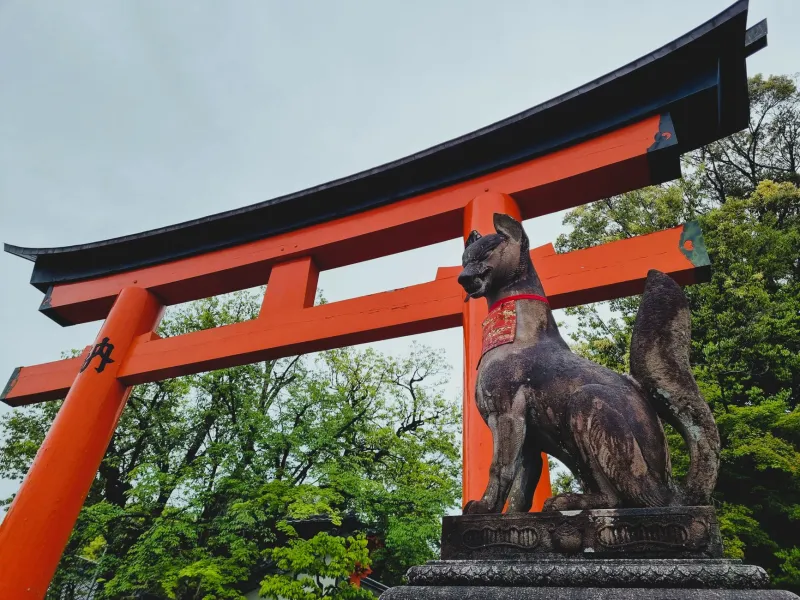
Inari is one of the most widely venerated deities in all of Shinto practice. With over 30,000 shrines dedicated to Inari across Japan — including the jaw-dropping Fushimi Inari-Taisha in Kyoto, famous for its seemingly endless corridors of orange torii gates — this isn't a niche spiritual figure. Inari is deeply woven into the fabric of everyday Japanese life.
What makes Inari fascinating is the deity's fluid nature. Inari is simultaneously male, female, and androgynous depending on the tradition or region you're exploring. Sometimes depicted as an old man carrying rice, sometimes as a beautiful woman, and sometimes as a bodhisattva figure that blends Buddhist and Shinto influences, Inari resists easy categorization. That ambiguity isn't a contradiction — it's kind of the whole point. Inari represents abundance, transformation, and the forces that exist between worlds.
The foxes? They're Inari's messengers, known as kitsune. Stone fox statues guard virtually every Inari shrine in Japan, often depicted holding a key, a jewel, a sheaf of rice, or a scroll in their mouths. Each object carries its own symbolic meaning — the key to a granary, wisdom, spiritual power. These aren't decorative choices. They're a visual language that generations of Japanese people have grown up reading intuitively.
The Kitsune: More Than Just a Pretty Design
In Japanese folklore, kitsune are far more complex than your average magical animal. They're shapeshifters. They accumulate wisdom and power over centuries, growing an additional tail for every hundred years of life — up to nine tails at the peak of their spiritual development. A nine-tailed fox is considered extraordinarily powerful, almost divine.
They can be benevolent guardians or clever tricksters depending on the story. Some kitsune fall in love with humans and live among them in disguise for decades. Others lead travelers astray with illusions called kitsunebi, or fox fire — those mysterious floating lights you've definitely seen referenced in atmospheric game environments and anime night scenes.
This duality is crucial. Kitsune aren't simply good or evil. They're complicated, which is exactly what makes them such compelling characters in modern storytelling.
How Anime and Manga Bring the Mythology to Life
The influence of Inari and kitsune mythology across anime and manga is genuinely enormous, even when it's not always obvious on the surface.
The most famous example in Western pop culture is almost certainly Naruto. The Nine-Tails — Kurama — sealed inside Naruto Uzumaki is a direct nod to the nine-tailed fox of Japanese mythology. The series plays with the duality of kitsune nature constantly: Kurama begins as a destructive, almost demonic force and slowly evolves into something more nuanced, mirroring the folklore idea that a fox's nature depends heavily on how it's treated and what intentions surround it.
Then there's Inuyasha, where fox demons appear as distinct characters with their own codes of honor and mischief. The fox child Shippo is a perfect example of the younger, less powerful kitsune — playful, a little chaotic, but fundamentally good-hearted.
More recently, anime like Kamisama Kiss and Fox Spirit Matchmaker put the Inari shrine tradition front and center, depicting shrine maidens, divine contracts, and fox familiars in ways that feel genuinely rooted in Shinto aesthetics. Even Spirited Away, while not strictly anime television, draws on Inari imagery through its layered spirit world populated by divine messengers and transforming creatures.
For viewers who grew up in the US, these shows often feel magical and mysterious in a way that's hard to articulate. A big part of that feeling comes from the fact that you're picking up on a consistent, coherent mythological system — even if nobody ever stops to explain it.
Gaming's Love Affair with the Sacred Fox
Video game designers have been equally enthusiastic about drawing from the Inari well. Okami, arguably one of the most visually and culturally rich games ever made, is essentially a love letter to Shinto mythology, with fox and wolf spirits playing central roles in a world built entirely around Japanese sacred aesthetics. Playing it feels like wandering through a living ink painting.
Ghost of Tsushima features fox shrines explicitly — small Inari shrines scattered across the island where players follow foxes to discover hidden spiritual sites. It's not just atmosphere dressing. The game designers understood that foxes lead you somewhere meaningful in Japanese tradition, and they built that into the actual gameplay loop.
Even Western-developed games have absorbed the kitsune aesthetic. Characters like Ahri in League of Legends and the fox-themed hero in Smite draw directly from the nine-tailed fox archetype, bringing kitsune imagery to audiences who may never have encountered it through anime first.
Why This Matters for Western Fans
There's a difference between enjoying something and understanding it — and honestly, you can do both at the same time. Knowing that the vermillion gates in a game aren't just pretty set dressing but actual representations of the boundary between the sacred and the everyday? That changes the way you move through those spaces.
Understanding that a character's nine tails signal centuries of accumulated wisdom and spiritual transformation rather than just a power level? That reframes entire character arcs.
At Inari Village, we think this kind of layered appreciation is what makes Japanese pop culture so endlessly rewarding to explore. The stories are entertaining on the surface and philosophically rich underneath. The kitsune mythology is a perfect example of that depth — ancient enough to have real spiritual weight, flexible enough to inspire fresh creativity across every generation.
Next time you spot a fox character with glowing eyes and multiple tails, take a second to think about the stone fox statues standing guard at thousands of shrines across Japan. They've been watching over people for a very long time. Now they're watching over your gaming sessions and anime marathons too.