The Spirit in the Discard Pile: How Japanese Folklore About Forgotten Objects Is Fueling America's Upcycling Revolution
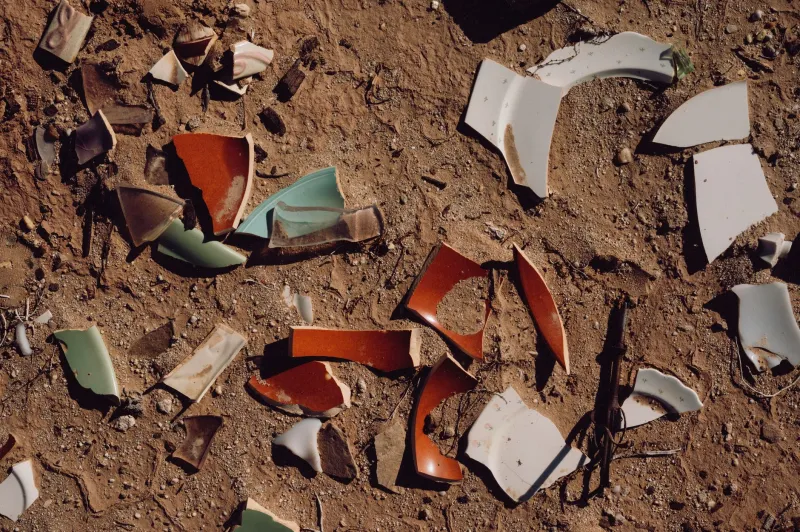
Imagine that everything you've ever thrown away still exists somewhere — not just in a landfill, but as a kind of emotional record. A grievance. A longing. In Japanese mythology, this isn't a metaphor. It's a category of being.
Tsukumogami are spirits that awaken in objects after they've been used for one hundred years — or, in some tellings, simply after they've been discarded with indifference. A worn-out sandal. A cracked umbrella. A tea kettle that served its household faithfully for decades before being tossed. These objects, according to Japanese folk belief, develop mono no kokoro — a heart of things — and with it, the capacity to feel the sting of abandonment.
It's an old story. But in 2024, a surprising number of American Gen Z artists, makers, and sustainability activists are treating it less like folklore and more like a framework.
Mono No Aware and the Weight of Stuff
To understand why tsukumogami mythology is resonating with American zero-waste culture, you have to start with mono no aware — a Japanese aesthetic concept that translates roughly as "the pathos of things." It's the bittersweet awareness that everything is impermanent, that beauty and loss are inseparable, that a cherry blossom is most beautiful precisely because it will fall.
Applied to objects, mono no aware creates a very different relationship with material things than the one most Americans grew up with. In a consumer culture built on planned obsolescence and fast fashion, objects are interchangeable and disposable. In a worldview shaped by mono no aware, every object carries a kind of accumulated meaning — and discarding it carelessly is a form of ingratitude.
This isn't sentimental hoarding. It's closer to what sustainability advocates call material respect — the idea that the resources, labor, and time embedded in an object have value that shouldn't be casually erased.
For a generation of Americans who grew up watching landfills fill up and oceans choke on plastic, that ancient Japanese framework lands with surprising force.
The Makers Invoking the Spirits
In Brooklyn, a textile artist named Solenne has built a small but devoted following around what she calls "tsukumogami work" — the practice of taking discarded garments and transforming them into new pieces that honor rather than erase their history. Visible mending. Patchwork that lets the original fabric speak. Embroidery that traces over stains and tears rather than hiding them.
"I started reading about tsukumogami during the pandemic," she says. "The idea that a garment could develop feelings after being abandoned — that it could become something with a grievance — hit me really hard. I had this pile of clothes I was about to donate and I started looking at them differently. Like, who made this? How long did someone wear it? What does it remember?"
Her work now sells out within hours of each release. The pieces are priced well above fast fashion, and her buyers — overwhelmingly Gen Z — describe them in language that's almost spiritual. "I bought it because it felt alive," one customer wrote in a review.
In Los Angeles, a ceramics collective called Yabureru (Japanese for "to break" or "to tear") specializes in kintsugi-adjacent work — the ancient Japanese art of repairing broken pottery with gold lacquer, treating the break as part of the object's story rather than a flaw to be hidden. The collective has expanded this philosophy into workshops that teach participants to repair broken household objects using kintsugi principles, explicitly framing the practice as anti-consumerist activism.
"We tell people: your bowl is not garbage because it cracked," says one of the collective's founders. "The crack is where it got interesting. The crack is where it got a soul."
Anti-Consumerism Gets a Mythology
One of the challenges of environmental activism is that it can feel abstract — statistics about carbon and landfill tonnage don't always land emotionally. What tsukumogami mythology offers is something rarer: a story about why waste is wrong that operates on a gut level.
When you imagine a discarded umbrella developing a spirit — becoming a yokai, wandering through the night with its one remaining rib, carrying the memory of the rain it sheltered you from — the act of throwing something away starts to feel different. Not just environmentally costly. Morally charged.
This is exactly what a growing number of Gen Z activists are leveraging. On TikTok and Instagram, creators with handles like @tsukumogami.studio and @spiritedmending are framing their upcycling content explicitly through the lens of Japanese folklore. Videos that begin with the question "what kind of spirit would your trash become?" are generating millions of views.
The aesthetic is unmistakable: part Studio Ghibli, part thrift store, part environmental manifesto. Abandoned objects photographed like portraits. Repaired items displayed with the reverence of artifacts. The visual language of Japanese folk art applied to American consumer debris.
Kintsugi as a Cultural Metaphor
Beyond the makers and the TikTok creators, tsukumogami philosophy is showing up in unexpected places. A zero-waste store in Denver uses the concept to frame its refill-and-repair model, with signage that reads: "Every object you repair is a spirit you free." A sustainability nonprofit in Philadelphia has incorporated mono no aware into its educational curriculum for middle schoolers, using Japanese folk stories about abandoned objects to open conversations about waste and responsibility.
What's notable is that none of these adoptions feel like appropriation for its own sake. They feel like genuine resonance — a cultural framework that solves a specific problem American environmentalism has struggled with: how do you make people feel the wrongness of waste, not just understand it intellectually?
Japanese folklore, it turns out, already worked that problem out. It just took a few centuries and an ocean crossing for the answer to arrive.
Every Discarded Thing Has a Story
At Inari Village, we're endlessly fascinated by the moments when ancient Japanese ideas surface in modern American life — not as trends, but as genuine solutions to genuine needs. The tsukumogami mythology finding a home in the zero-waste movement feels like one of those moments.
There's something deeply right about the idea that objects carry memory. That care leaves a trace. That what we throw away says something about what we value.
The spirits in the discard pile are paying attention. Maybe it's time we did too.