Shape-Shifters and Grief: Why Japanese Folklore Creatures Are Helping Americans Find Their Way Through Loss
Grief is a shapeshifter. Anyone who's been through it knows this. It looks like anger one Tuesday and numbness the next Friday and something uncomfortably close to relief on a random Sunday afternoon, and then back to devastation by Monday. It doesn't hold still. It doesn't follow the five stages in order. It transforms constantly, and it transforms you.
Maybe that's why a growing number of Americans are finding strange comfort in Japanese folklore's most famous shape-shifters.
The Creatures at the Edge of Things
Japanese mythology has always been unusually interested in thresholds — the spaces between states of being. Not quite alive, not quite dead. Not quite human, not quite animal. Not quite in this world, not quite in the next.
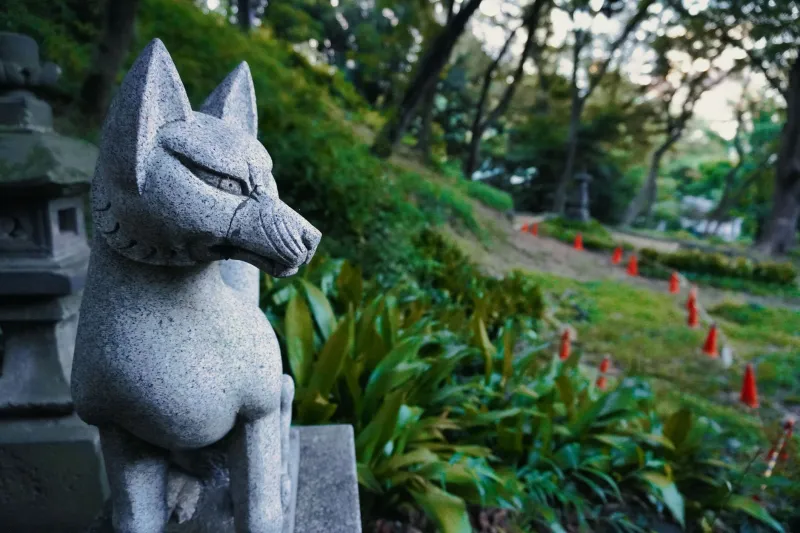
The kitsune, the fox spirit, accumulates wisdom and power across lifetimes, shifting form as it grows. The tanuki, the raccoon dog, transforms itself to deceive, to survive, to play — a trickster who understands that identity itself is malleable. The yūrei, the ghost, is a being caught between worlds, unfinished, unable to move on until something unresolved gets resolved. And the tengu, part human and part bird, guards liminal mountain spaces where the ordinary rules of the world soften.
These aren't neat metaphors for grief. They're something messier and more honest than that — which is precisely why they're resonating.
"Western grief culture gives you a timeline and a checklist," says a grief support facilitator in Chicago who began incorporating Japanese folklore archetypes into her group sessions in 2022. "Japanese mythology gives you creatures who are just... stuck in the in-between. And that actually maps onto what grief feels like way more accurately."
The Pandemic Opened a Door
The timing matters here. The COVID-19 pandemic created a particular quality of loss that existing American grief frameworks were badly equipped to handle. It wasn't just the deaths — though there were nearly a million of those in the US alone. It was the accumulated, ambiguous grief of canceled futures, lost rituals, fractured communities, and identities that no longer fit the lives people returned to.
Ambiguous grief — the kind without a clear object or endpoint — is notoriously hard to process. There's no funeral for a friendship that quietly dissolved during lockdown. There's no casserole brigade for the version of yourself you thought you'd be by now.
Into that gap, Japanese folklore creatures walked in, largely through the side door of pop culture.
Anime series like Fruits Basket, Natsume's Book of Friends, and Mushishi — all of which center on characters navigating relationships with supernatural beings from Japanese folklore — saw massive viewership increases during 2020 and 2021. Fan communities on Reddit, Tumblr, and Discord became places where people talked not just about the shows but about what the mythological frameworks inside them meant to them personally.
"I started watching Natsume because I was bored," one user wrote in a thread that eventually accumulated hundreds of replies. "I kept watching it because it was the only thing that made me feel like it was okay to not be done grieving yet."
The Psychology of the In-Between
There's a reason liminal mythological figures resonate during times of personal upheaval, and psychologists who study narrative therapy have some useful things to say about it.
Humans process difficult experiences through story. When we can find an external narrative that maps onto an internal experience, it creates a kind of cognitive handrail — something to hold onto while we move through terrain that otherwise feels formless.
The yūrei, specifically, offers something that Western ghost mythology often doesn't: a framework in which haunting is understandable, even sympathetic. The yūrei isn't evil. She's unfinished. Her haunting comes from attachment, from love that hasn't found its resolution yet. For people who feel haunted by loss — who can't stop returning to what they could have said, what they should have done — that reframe is quietly powerful.
Similarly, the kitsune's shape-shifting, which in older folklore could be terrifying and deceptive, has been reinterpreted in contemporary storytelling as something more nuanced: the necessity of changing form to survive, the way identity isn't fixed but accumulated. For people in the middle of major life transitions — divorce, job loss, a death that restructures the whole family system — that's not a scary idea. It's a lifeline.
Creators Are Paying Attention
American artists, writers, and game designers have taken notice of this resonance and are building with it deliberately.
Independent illustrators on Instagram and Etsy are creating grief-specific art centered on Japanese folklore imagery — yūrei rendered tenderly rather than terrifyingly, tanuki caught mid-transformation with expressions of exhausted recognition. Several small press books published in the last two years have explicitly woven Japanese mythological archetypes into narratives about loss and recovery, finding audiences well beyond typical anime or mythology fan circles.
A tabletop role-playing game released by an indie studio in 2023 built its entire emotional framework around players taking on the roles of supernatural beings from Japanese folklore navigating grief and unfinished business. Its Kickstarter funded in under 48 hours.
"People are hungry for mythology that doesn't promise resolution," the game's lead designer said in an interview. "Japanese folklore is really honest about the fact that some things don't get tied up neatly. Some spirits wander. Some foxes keep changing. That's not a failure of the story. That's just what being alive is like."
Finding Your Creature
For people drawn to this intersection of Japanese folklore and personal grief work, the entry points are varied and low-pressure. Anime remains the most accessible gateway — Natsume's Book of Friends in particular has earned a genuine reputation as a balm for grief among viewers who came to it with no prior knowledge of Japanese mythology.
Beyond screen time, folklore reading groups have sprung up in cities across the country, sometimes organized through libraries, sometimes through Japanese cultural centers, sometimes through grief support networks that have quietly started incorporating mythological storytelling into their programming.
The common thread in what people describe finding in these spaces is permission — permission to be in-between, to not be finished, to keep transforming without having arrived anywhere yet.
The tanuki doesn't apologize for changing shape. The kitsune doesn't explain itself. The yūrei keeps returning until whatever needs resolving gets resolved.
Maybe that's enough of a map.