Slow Down and Tend the Field: What Japanese Village Wisdom Is Teaching Burned-Out Americans About Living Again
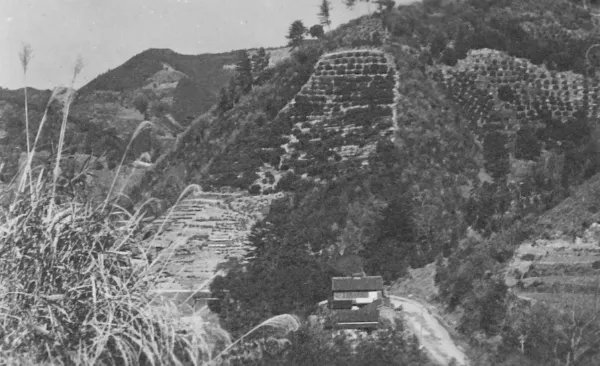
Photo: Mennonite Church USA Archives, No restrictions, via Wikimedia Commons
Let's be honest about where a lot of us are right now. The calendar is full, the inbox never empties, and the idea of a vacation feels less like rest and more like a compressed performance of relaxation that you'll need to recover from. Somewhere along the way, "doing well" started meaning "doing constantly," and a lot of Americans are quietly, exhaustedly done with it.
Enter mura.
What Is Mura, and Why Does It Sound Like Medicine?
In Japanese, mura simply means village. But as a cultural concept, it carries a whole philosophy of life — one built around collective rhythms, seasonal awareness, shared responsibility, and the understanding that a community is only as healthy as its most neglected member.
In traditional Japanese village life, the agricultural calendar didn't just dictate when to plant and harvest. It structured everything: when to rest, when to celebrate, when to ask neighbors for help, and when to offer it. The village wasn't a backdrop to individual life — it was life. Identity, purpose, and wellbeing were communal properties, not personal projects.
None of that is particularly new information. But the speed at which American professionals — particularly millennials and Gen Z workers navigating a post-pandemic landscape of remote work, layoffs, and perpetual digital availability — are reaching for these ideas is striking. And it's not just philosophy. People are actually changing how they live.
From Concept to Community Garden
In Asheville, North Carolina, a loose collective of remote workers has started organizing their weeks around what they call "village days" — a term they borrowed directly from their reading about Japanese mura traditions. On these days, the group meets to cook together, share surplus from their respective container gardens, and make decisions about shared resources through a consensus process inspired by Japanese communal farming practices.
"We don't have rice paddies," admits one member with a laugh. "But we have a shared Google Drive and a community fridge, and honestly, the principles translate."
This kind of adaptation — taking the structure of Japanese village thinking without claiming to replicate its specific cultural context — is showing up in intentional communities from Vermont to Oregon. Seed libraries modeled on the Japanese tradition of preserving heirloom varieties (zairai-shu) for community use. Meal-sharing rotations that echo the cooperative cooking arrangements of rural Japanese neighborhoods. Seasonal calendars that mark the old Japanese sekki — the 24 micro-seasons — as a way of paying closer attention to the natural world.
It's not cosplay. It's people genuinely finding that an ancient framework helps them live the way they actually want to.
The Seasonal Living Piece Is Big
One of the most widely adopted elements of mura philosophy among American practitioners is shun — the Japanese concept of eating and living in alignment with what's seasonally available and at peak vitality. In traditional village life, this wasn't a lifestyle choice; it was just reality. You ate what the season provided, you preserved what you could, and you trusted the cycle.
For Americans conditioned by grocery stores that offer strawberries in December and butternut squash in April, shun requires active unlearning. But the people doing it describe the shift as quietly transformative.
"I started buying only what was at the farmers market for one season," says a graphic designer in Portland who began exploring Japanese seasonal living after a burnout episode in 2022. "By the third week, I realized I was actually excited about food again. I was looking forward to things. That hadn't happened in years."
The psychological dimension here is real. Anticipation — the knowledge that something good is coming but isn't here yet — is a documented contributor to wellbeing. Traditional village calendars were essentially machines for generating healthy anticipation. The first persimmons of autumn. The cherry blossoms that mean winter is finally over. When everything is available all the time, nothing feels special. Shun restores the specialness.
Collective Harmony Over Individual Optimization
Perhaps the sharpest edge of mura philosophy — the one that cuts most directly against mainstream American culture — is its orientation toward collective harmony over individual achievement.
The Japanese concept of wa (harmony) isn't about everyone agreeing or suppressing conflict. It's about a commitment to maintaining the conditions under which a community can function and flourish together. Decisions in traditional village contexts were made slowly, with input from everyone affected, and implemented in ways that preserved relationships even when outcomes were imperfect.
For Americans trained to optimize personally and move fast, this is genuinely counterintuitive. But the intentional communities drawing on these ideas are finding that slower, more inclusive decision-making produces something that efficient top-down processes don't: buy-in. People who feel genuinely heard tend to show up for the community in ways that people who feel steamrolled simply don't.
"We spent three meetings deciding where to put the compost bin," says a member of a Vermont cohousing project that has explicitly incorporated Japanese village governance ideas into its structure. "And you know what? Nobody has ever complained about the compost bin. Not once."
Resilience as a Collective Crop
There's a deeper reason the mura framework resonates with burned-out Americans, and it has to do with what resilience actually means.
In hustle culture, resilience is an individual trait — your ability to take a hit and keep going. It's framed as toughness, capacity, output-under-pressure. The village model offers a completely different definition: resilience is what happens when a community is so interconnected, so mutually attentive, that no single member has to absorb catastrophe alone.
In Japanese folklore, the village isn't just a setting. It's almost a character — a living system with its own memory, its own protective instincts, its own relationship to the spirits of the land. The Inari deity, worshipped at shrines throughout rural Japan, is fundamentally a guardian of that system: of harvests, of community prosperity, of the thread that connects human effort to natural abundance.
Bringing that sensibility into daily American life doesn't require a shrine or a rice paddy. It requires, maybe, just a willingness to tend something together — a garden, a meal, a neighborhood, a friendship — and to trust that the tending itself is enough.
The village has been waiting. It turns out, so have we.