Swirling Grounds and Sacred Foxes: How Americans Are Turning Morning Coffee Into a Divination Ritual
Photo: D-Kuru, CC BY-SA 4.0, via Wikimedia Commons
Somewhere between your second cup of coffee and scrolling your morning feed, a quiet spiritual revolution is happening — and it smells like espresso with a hint of incense.
Across the US, a growing number of people are pausing before they rinse out their mugs. They're tilting them sideways, studying the patterns left behind, and asking the same question that Japanese fortune-seekers have asked for centuries at Inari shrines: What is the universe trying to tell me today?
It sounds niche. It's anything but.
What Even Is Japanese Divination, and Why Does It Feel So Familiar?
Japan has a long, layered history with fortune-telling. At Inari shrines — those iconic red-gate sanctuaries dedicated to the fox deity associated with harvests, prosperity, and intuition — visitors have traditionally drawn omikuji (paper fortune slips) as a way of reading the energy around a decision or a season of life. There's also tsuji-ura, a practice of listening to strangers' conversations at crossroads to interpret omens, and various forms of nature-reading that treat the everyday world as a living message board.
None of these traditions required special tools or years of training. That accessibility is exactly what's catching on with younger Americans who are spiritually curious but maybe a little burned out on the gatekeeping that can come with more formalized practices.
"Tarot has this whole learning curve — 78 cards, reversed meanings, spreads," says one TikTok creator who posts under the handle @foxgatemornings and has built a following around what she calls "Inari-style daily readings." "Coffee grounds feel more intuitive. You made the coffee. The pattern is yours. It's personal in a way that feels really grounded."
The Grounds Movement Is Getting Very Online
Search "coffee cup reading" on TikTok and you'll find millions of views. But a newer, more specific corner of that world is explicitly weaving in Japanese folklore — particularly imagery and symbolism connected to Inari and the kitsune (fox spirit) tradition.
Creators are framing morning divination as a kind of kehai practice — a Japanese concept roughly meaning "sensing the atmosphere" or picking up on subtle environmental cues. The idea is that your coffee, your tea, even the way steam rises from your bowl of miso, can carry information if you're paying attention.
One popular format involves swirling the last sip of a dark coffee in a white mug, flipping it upside down on a saucer, waiting three minutes (a number that shows up repeatedly in Japanese folk ritual), then interpreting the shapes. Fox? Abundance and cleverness incoming. A gate or archway? A threshold moment, a change. Scattered dots? Scattered energy — time to simplify.
Is this historically accurate Japanese divination? Not exactly. But that's also kind of the point.
A Spiritual Remix, Not a Straight Copy
The people driving this trend are pretty upfront about the fact that they're doing something new. They're not claiming to replicate shrine rituals or speak for Shinto tradition. What they're doing is more like cultural inspiration — taking the feeling of Japanese folk wisdom (attentive, nature-connected, unhurried) and applying it to materials they already have.
"I grew up Catholic and then spent years with no spiritual practice at all," one Reddit user wrote in a thread about the trend. "Japanese folklore gave me a framework that felt less about rules and more about noticing. That's what I needed."
That framing — folklore as a lens for noticing, rather than a set of beliefs to adopt wholesale — is showing up again and again in the communities forming around these practices. And it maps neatly onto the Inari tradition itself, which has always been unusually flexible and syncretic compared to other Japanese religious currents. Inari is worshipped by Buddhists and Shintoists alike, appears in urban and rural contexts, and adapts to whoever is seeking.
Tea Leaves, Trembling Flames, and Other Kitchen Omens
Coffee grounds are the most viral entry point, but they're not the only one. Loose-leaf green tea reading is picking up steam (literally) among people who want a practice that feels a little quieter, a little more traditionally Japanese in its aesthetics.
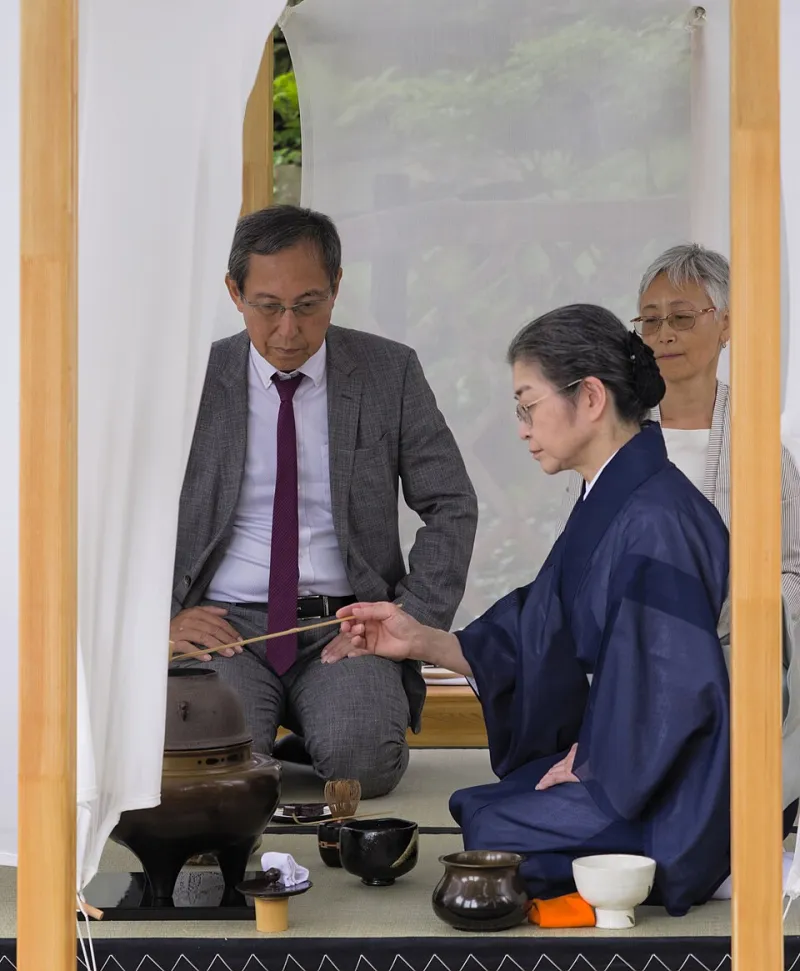
The approach borrows loosely from both Western tasseography and Japanese chadō (the way of tea) philosophy — the idea that every movement in a tea ceremony carries intention and meaning. American practitioners aren't performing the full ceremony, but they're borrowing its core principle: slow down, pay attention, and let the ordinary become significant.
Candle flame reading is another practice getting the Japanese folklore treatment online. Creators reference hi no kami — fire deity traditions — as context for watching how a candle behaves during a journaling session or evening wind-down ritual. A steady flame means clarity. A flickering one means unsettled energy, or a message trying to get through.
Again, this is a creative synthesis more than a direct lineage. But the cultural conversation it opens — about attention, about daily ritual, about finding meaning in small things — feels genuinely connected to something real in Japanese folk tradition.
Why This Moment, Why This Tradition?
It's worth asking why Japanese divination specifically is having this moment in American wellness culture, when there are fortune-telling traditions from dozens of cultures to draw from.
Part of it is aesthetic — the visual language of Inari shrines, red gates, and fox imagery is genuinely striking and translates beautifully to social media. But there's something deeper, too.
Japanese folk practices tend to locate the sacred in the everyday rather than in grand ceremonies or special occasions. The idea that your morning coffee, your backyard sparrow, the way rain hits your window, might all be carrying messages — that's a very different spiritual proposition than one that requires you to set aside special time, special tools, or special training.
In a culture where people are increasingly exhausted by optimization and productivity pressure, a practice that says the thing you're already doing is enough lands differently. It lands like relief.
The fox at the gate — clever, watchful, present — has always been a symbol of intuition over intellect. Maybe that's exactly the guide Americans need right now, peering out from the bottom of a coffee mug on a Tuesday morning.
Pay attention. The grounds are speaking.