Neighbors Again: What Ancient Japanese Village Bonds Can Teach Us About Fighting Loneliness in America
Somewhere between the algorithmic scroll and the two-hour commute, something got lost. Not dramatically — nobody announced it. Slowly, the neighbors stopped waving. The block parties dried up. The casseroles stopped showing up at the door when someone had a hard week. Americans didn't choose isolation so much as drift into it, one convenience at a time.
But in pockets of the country, people are pushing back — and some of them are looking to a very old playbook: the traditional Japanese village.
What the Village Actually Meant
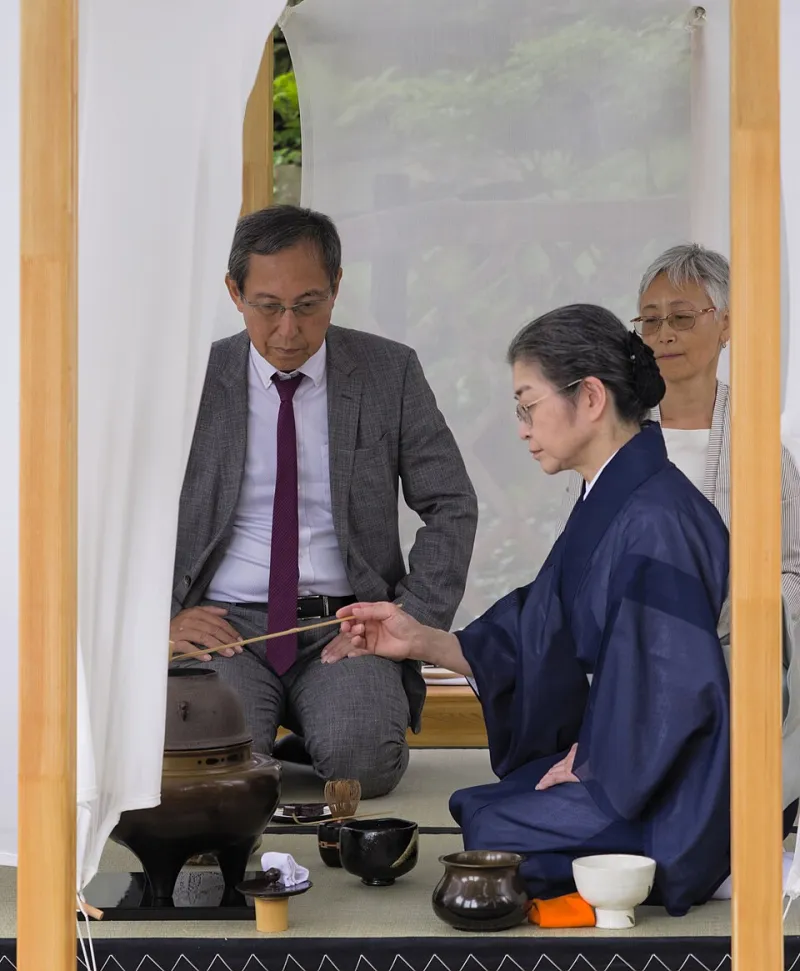
In rural Japan, the mura — the village — was never just a geographic location. It was a living web of obligation, identity, and mutual survival. Your neighbors weren't background characters in your life. They were co-authors of it.
Two concepts in particular defined village social life. The first is mura itself, which carried a deep sense of communal responsibility. You belonged to the village, yes — but the village also belonged to you, and to everyone in it. Stepping outside that web of reciprocity wasn't just unusual; it was practically unthinkable.
The second is yui (結い), a system of reciprocal labor exchange that predates any formal economy. Farmers would rotate through each other's fields during planting and harvest — not for pay, but because the understanding was built into the culture itself: your labor today becomes someone else's labor for you tomorrow. It wasn't charity. It wasn't a transaction. It was something harder to name in English — maybe just belonging.
These weren't utopian ideals. They were survival strategies that also happened to make life feel meaningful. And that combination is exactly what's catching American attention right now.
Bringing Yui to the Block
In Southeast Portland, a loose collective of about forty households has been quietly running what its members call a "skill loop" for the past three years. The idea is simple: everyone registers what they can offer — home repair, childcare, bookkeeping, cooking lessons, plant care — and what they need. There's no currency involved. Hours are logged, but not strictly enforced. The social pressure to reciprocate comes not from a ledger but from genuine relationship.
"We didn't start out calling it yui," says one of the organizers, a landscape designer who got interested in Japanese agricultural traditions through a permaculture program. "But when I read about it, I just thought — that's exactly what we're trying to build. The word gave us a framework that helped people understand why it works."
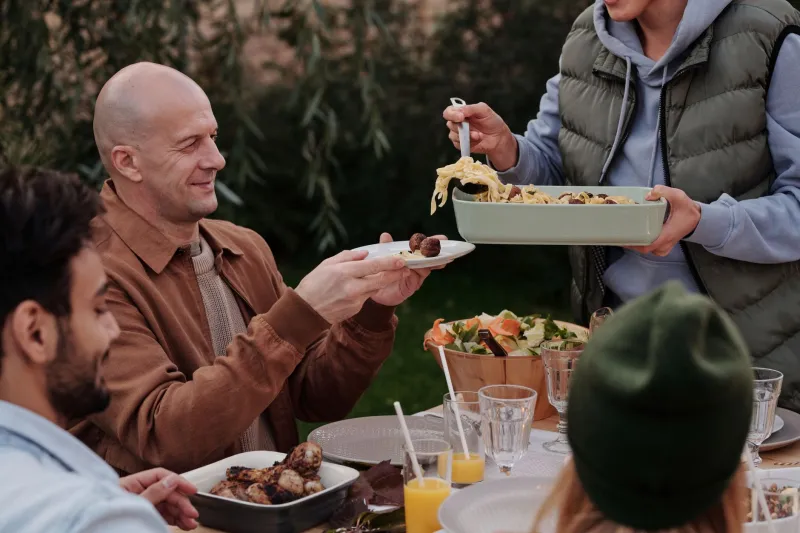
The collective now shares tools, trades babysitting, and has even coordinated a small community garden on a vacant lot. Turnover is low. Participation is high. And several members say it's the first time since childhood that they've genuinely known their neighbors.
Obligation Isn't a Dirty Word
Here's where the Japanese village model bumps up against American cultural instincts: it requires obligation. Real, felt, social obligation — the kind that means showing up even when it's inconvenient, because someone is counting on you.
American individualism has historically treated obligation as a threat to personal freedom. But a growing number of researchers, community organizers, and frankly just tired people are starting to wonder if that framing has cost us something enormous.
The Japanese concept of on (恩) — a sense of deep gratitude and indebtedness toward those who have given to you — is related to this. It's not guilt. It's more like a warm awareness that you exist within a network of care, and that awareness makes you want to give back. Psychologists studying loneliness have found that feeling genuinely needed by others is one of the most powerful antidotes to isolation. On essentially codifies that feeling into a cultural value.
"We've been sold this idea that needing people is weakness," says a community psychologist in Chicago who studies social resilience. "But the data is pretty clear — interdependence is what keeps people mentally healthy. The Japanese village model just institutionalized what humans have always needed."
Intentional Communities With a Japanese Blueprint
Beyond informal neighborhood networks, some Americans are going further — building intentional communities explicitly shaped by Japanese village principles. Outside of Asheville, North Carolina, a small co-housing project drew direct inspiration from the satoyama concept: the traditional Japanese idea of a landscape where human settlement and nature exist in productive, respectful balance. Residents share land stewardship duties, rotate cooking responsibilities, and hold regular hansei (reflection) sessions to address community tensions before they fester.
"It's not about being Japanese," one resident is careful to note. "It's about borrowing a wisdom tradition that figured out some things we haven't. The structure gives us permission to depend on each other, which sounds simple but is actually really hard for most Americans to do."
That phrase — permission to depend on each other — comes up again and again in these conversations. Something about having a cultural framework, even a borrowed one, seems to make vulnerability feel less risky.
The Fox Knows the Way Home
At Inari Village, we've always believed that Japanese folklore and tradition carry practical wisdom that travels well across cultures. The kitsune finds its way through the forest not by blazing a solo trail, but by knowing the landscape intimately — every root, every shadow, every neighbor creature along the path. The village, in Japanese tradition, is that landscape made human.
What Americans are rediscovering — haltingly, imperfectly, beautifully — is that independence was never the whole story. The mura didn't erase the individual. It held the individual inside something larger, something that made the hard seasons survivable and the good ones worth celebrating.
Your neighbor's harvest is your harvest. Your neighbor's trouble is yours to help carry. That's not a burden. That's the deal — the one that makes everything else possible.
Small Steps Toward the Village
You don't have to move to an intentional community in the Blue Ridge Mountains to start. The principles of yui and mura scale down beautifully.
- Start a skill swap with just three or four neighbors. Offer something specific — sourdough lessons, help moving furniture, a standing offer to walk someone's dog.
- Create a simple needs board — a shared note, a group text, a whiteboard in a common hallway — where people can post what they have and what they need.
- Show up consistently. The Japanese village model wasn't built on grand gestures. It was built on small, reliable acts repeated across years.
- Name the exchange. Telling your neighbor "I'm doing this because we look out for each other" is surprisingly powerful. It transforms a favor into a relationship.
The loneliness epidemic isn't going to be solved by an app or a policy alone. It's going to be solved, one small village at a time, by people who decide to need each other again — and to let that be okay.