When the Bell Rings, the Mind Goes Quiet: America's Growing Love Affair With Japanese Temple Sound Healing
Close your eyes for a moment and imagine the sound. Not a sharp ring — nothing like an alarm or a notification. Something deeper, rounder, a tone that seems to start somewhere outside your body and then slowly move through it. The note hangs in the air long after the striker lifts away, rippling outward in concentric waves of sound until it finally dissolves into the kind of silence that actually feels like something.
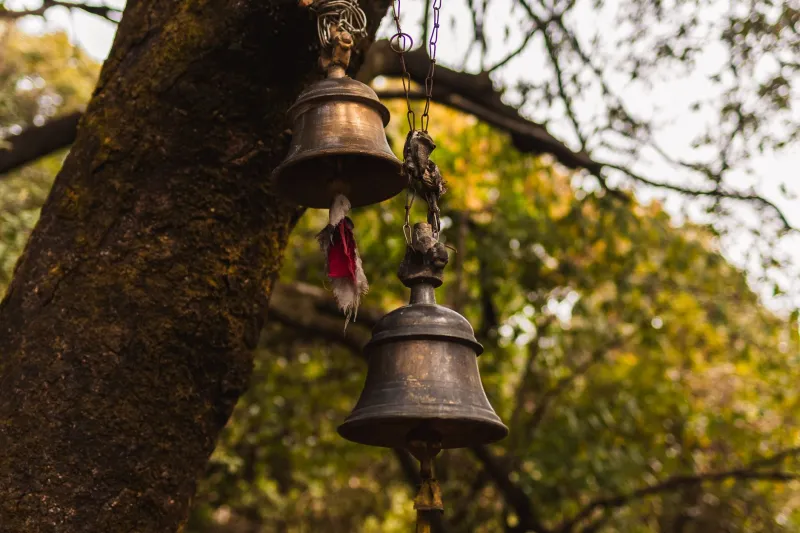
That's the bonshō — the large hanging temple bell found at Buddhist temples across Japan — and for centuries, its resonance has marked the rhythm of sacred time. At New Year's, Japanese temples ring their bells 108 times to release the 108 earthly desires that Buddhism teaches cloud the human mind. The sound isn't decoration. It's medicine.
And now, increasingly, it's finding a second home in American cities hungry for exactly that kind of medicine.
The Noise Problem No App Can Fix
Americans are overstimulated in ways that feel genuinely new. The average US adult now encounters between 4,000 and 10,000 brand messages per day, according to marketing research firm Yankelovich. Add push notifications, open-plan offices, social media scroll sessions, and the ambient roar of urban life, and you have a nervous system under near-constant siege.
Meditation apps helped — for a while. But there's a growing cohort of wellness seekers who find that staring at a phone screen while trying to achieve inner peace is, to put it mildly, counterproductive. They want something embodied. Something that doesn't require a login.
Enter sound healing — and specifically, the Japanese-influenced temple bell and gong meditation movement that's been quietly building momentum in US wellness communities for the past several years.
"People come in completely wired," says Jordan Ellery, who runs a sound healing practice in Denver called Still Point and trained extensively with practitioners in Kyoto. "By the end of a session, they look like they've had eight hours of sleep. The body responds to these frequencies in a way that nothing else quite replicates."
What the Neuroscience Says
It's tempting to dismiss sound baths as the wellness world's latest aesthetic trend — all Instagram-worthy singing bowls and ambient lighting. But the physiological research is more interesting than the vibes suggest.
Studies from institutions including the University of California San Diego have found that low-frequency sound vibrations can measurably reduce cortisol levels and activate the parasympathetic nervous system — the "rest and digest" mode that modern life so aggressively suppresses. A 2016 study published in the Journal of Evidence-Based Integrative Medicine found that participants in a sound meditation session reported significantly lower tension, anxiety, and physical pain afterward.
The specific frequencies produced by large bronze temple bells and gongs — typically in the 40 to 80 Hz range — are particularly interesting to researchers studying brainwave entrainment. The theory holds that the brain naturally synchronizes its electrical activity to external rhythmic stimuli, a process called neural entrainment. Deep, sustained tones can nudge the brain from beta waves (active, anxious, alert) toward theta waves (the dreamy, creative state associated with deep meditation and light sleep).
In other words, the monks weren't wrong.
The Shinto Dimension: Sound as Sacred Invitation
Buddhist temple bells get most of the Western attention, but Shinto traditions carry their own profound relationship with sound. At Shinto shrines, visitors ring a large bell (suzu) before prayer — not to summon a deity, but to purify the space and alert the kami (spirits) to their presence. The bell marks a threshold between ordinary and sacred space.
This concept of sound as boundary — as a tool for transitioning between states of being — resonates deeply with what American practitioners describe experiencing in modern sound bath settings. "There's something about the bell that says this moment is different," says Naomi Whitfield, a sound therapist in Brooklyn who incorporates Shinto-inspired ritual into her sessions. "You're not just lying on a yoga mat. You've crossed into somewhere else."
For Naomi's clients — many of them tech workers, healthcare providers, and parents of young children — that threshold experience is itself part of the healing. "They need permission to stop," she says. "The bell gives them that permission in a way that a timer on an app never could."
What a Session Actually Looks Like
If you've never attended a temple bell sound bath, the format is simpler than you might expect. Participants typically lie on yoga mats or sit comfortably in a darkened or softly lit space. The practitioner — sometimes called a sound guide — uses mallets, padded strikers, or friction techniques to produce sustained tones from a combination of instruments: Japanese rin bowls, large bronze gongs, Tibetan singing bowls, and in some dedicated spaces, replica bonshō bells.
Sessions generally run 45 to 90 minutes, with no instruction required beyond "lie still and let the sound move through you." There's no performance pressure, no pose to perfect, no score to track. For many Americans, this itself is the most radical part.
"I cried the first time," admits Marcus Webb, a software engineer in Seattle who now attends monthly sessions. "I couldn't even tell you why. Something just released. I think my body had been waiting a long time for something it didn't know how to ask for."
Finding (or Creating) Your Own Experience
The good news: you don't need to fly to Kyoto to access this tradition. Sound healing events rooted in Japanese sonic practice are now available in most major American cities, often listed under terms like "sound bath," "gong meditation," or "Japanese bell meditation" on platforms like Eventbrite, Mindbody, and local yoga studio websites.
If you're in a smaller market or simply want to begin at home, a quality rin bowl (a small Japanese meditation bell) can be purchased from reputable Buddhist supply shops for $30 to $80. Strike it gently, let the tone fully decay before your next thought, and sit with the silence that follows. That gap — the space between the sound and the quiet — is where practitioners say the real work happens.
For those drawn to the communal dimension, some Japanese cultural centers and Buddhist temples across the US offer public bell-ringing ceremonies, particularly around New Year's. The joya no kane tradition of 108 strikes is an extraordinary sensory experience, free and open to anyone willing to stand in the winter air and listen.
The Village Knows Something
At Inari Village, we're drawn to the moments when ancient Japanese practice speaks directly to modern American need — not as cultural costume, but as genuine transmission. The temple bell has been ringing for over a thousand years. It was always going to find its way here eventually.
In a world that profits from your distraction, choosing to sit in a room and do nothing but listen to a bell ring might be the most countercultural act available to you. And if your nervous system happens to reset in the process? Consider that a bonus.