Street Vendor Secrets: The Japanese Festival Foods You Should Be Making at Home Right Now
Close your eyes and picture a Japanese summer festival. Paper lanterns strung between trees. The low, steady beat of taiko drums carrying through the evening air. Children in yukata darting between stalls. And everywhere — everywhere — the smell of something incredible cooking on an iron griddle.
That's the food we want to talk about. Not the polished restaurant versions. Not the grocery store shortcuts. The real stuff — the dishes that exist specifically because people were gathered together in celebration, hungry and happy, and someone decided to feed them something worth remembering.
For American home cooks who've fallen in love with Japanese culture, these foods are a revelation. They're largely unknown outside of Japanese communities and serious food enthusiasts, they're deeply tied to cultural and seasonal meaning, and — here's the part that might surprise you — most of them are genuinely achievable in a standard American kitchen with a little planning.
Let's get into it.
Why Festival Food Is Different
In Japan, matsuri (festivals) are tied to the agricultural calendar, to Shinto shrines, and to seasonal transitions. The food served at these events isn't random — it reflects what's in season, what's locally significant, and what the occasion calls for. Eating at a festival stall is a participatory act. You're not just grabbing a snack; you're taking part in something communal.
Many of these dishes are also tied to specific shrine visits. Vendors set up along the approach to major Shinto shrines — the path called the sandō — and the act of eating their food becomes woven into the ritual of the visit itself. That context matters, even when you're recreating the food thousands of miles away. Knowing why a dish exists makes the cooking more intentional and the eating more meaningful.
Takoyaki: The Dish That Needs Its Own Pan (And Is Worth It)
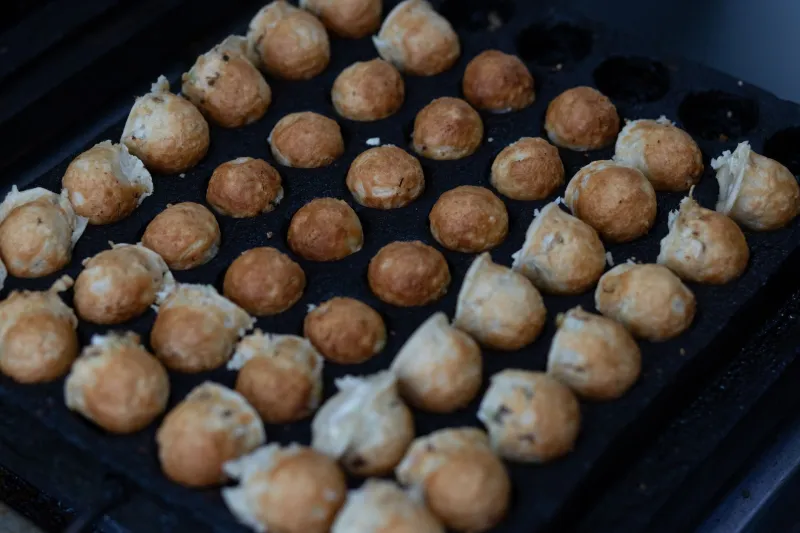
Takoyaki — round, golden balls of octopus-filled batter — are probably the most iconic festival food in Japan, originating in Osaka and now beloved nationwide. They're crispy on the outside, molten and savory inside, and topped with a drizzle of tangy takoyaki sauce, Japanese mayo, bonito flakes, and dried seaweed.
You will need a takoyaki pan. It's a cast iron or nonstick pan with hemispherical molds, and you can find one on Amazon for around $25-$35. It's an investment that pays off immediately, because once you've made these for a group of friends, you will be making them constantly.
Basic Takoyaki Recipe (makes about 30 balls)
- 1 cup all-purpose flour
- 2 cups dashi stock (instant dashi powder dissolved in water works perfectly)
- 2 eggs
- 1 tbsp soy sauce
- ½ lb cooked octopus, cut into small pieces (frozen is fine; thaw and pat dry)
- 3 green onions, thinly sliced
- ¼ cup pickled ginger, finely chopped
- Tenkasu (tempura scraps) — optional but highly recommended for texture
Whisk the flour, dashi, eggs, and soy sauce into a smooth, thin batter. Heat your takoyaki pan over medium-high and oil each mold generously. Fill each mold to the brim with batter, then add a piece of octopus, a pinch of green onion, a bit of ginger, and some tenkasu to each. As the edges begin to set (about 2 minutes), use a skewer or chopstick to rotate each ball 90 degrees. Continue rotating until fully round and golden — about 4-5 minutes total. Top with sauce, mayo, bonito, and aonori (dried seaweed flakes).
Serve immediately. They wait for no one.
Okonomiyaki: The Savory Pancake That Feeds a Crowd
Okonomiyaki translates roughly to "grilled as you like it," and the name tells you everything. It's a thick, savory pancake built on a cabbage-and-batter base that you customize with whatever sounds good — shrimp, pork belly, cheese, mochi, corn. It's a festival food, a comfort food, and one of the most satisfying things you can put on a griddle.
For a US kitchen, a large cast iron skillet or electric griddle works beautifully.
Simple Osaka-Style Okonomiyaki (serves 4)
- 2 cups finely shredded green cabbage
- 1 cup all-purpose flour
- ¾ cup dashi stock
- 2 eggs
- ½ tsp baking powder
- ½ lb thinly sliced pork belly (or bacon works in a pinch)
- 4 green onions, sliced
- Okonomiyaki sauce (available at most Asian grocery stores or online)
- Japanese Kewpie mayo
- Bonito flakes and aonori for topping
Combine flour, dashi, eggs, and baking powder into a batter. Fold in the cabbage and green onion — the batter should be thick with cabbage. Heat a well-oiled skillet over medium. Pour in the batter to form a round pancake about an inch thick. Lay pork belly slices across the top. Cook for 4-5 minutes until the bottom is set, then flip carefully and cook another 4-5 minutes. Top with sauces and garnishes.
Cut into wedges at the table. The presentation alone will make your guests feel like they're standing at a festival stall in Hiroshima.
Mitarashi Dango: Sweet, Chewy, and Deeply Symbolic
Dango are skewered rice flour dumplings eaten throughout Japan year-round, but mitarashi dango — coated in a sweet-salty soy glaze — are the version most associated with shrine festivals. The name comes from the Shimogamo Shrine in Kyoto, where they were originally sold along the shrine path.
They're made from a mixture of joshinko (rice flour) and shiratamako (glutinous rice flour), both available at Asian grocery stores or on Amazon. Knead them with warm water until smooth, roll into small balls, boil until they float, then skewer three to five per stick. The glaze is simple: soy sauce, sugar, mirin, and a little starch to thicken it, brushed on and lightly torched or broiled for that glossy, caramelized finish.
Mitarashi dango are an excellent make-ahead party dish and a genuinely impressive offering at any Japanese-themed gathering.
Sourcing Ingredients in the US
Most of what you need is more accessible than you'd think. Japanese grocery chains like Mitsuwa and Nijiya operate in major US cities. H-Mart (a Korean chain) carries most Japanese pantry staples. And for everything else, Amazon and online retailers like Japan Centre US or Umami Insider can ship directly to your door.
Key items to stock: dashi powder, Kewpie mayo, okonomiyaki sauce, mirin, bonito flakes, aonori, shiratamako, joshinko, and tenkasu. With these in your pantry, you're equipped to host a proper matsuri spread on short notice.
Hosting Your Own Matsuri Table
The real magic of festival food is that it's communal by design. Takoyaki pans get passed around. Okonomiyaki gets cut and shared. Dango disappear fast. These dishes invite people to gather close, watch things cook, and participate in the making.
Set a low table, light some candles, put on a playlist of traditional Japanese festival music, and let the food do the rest. You don't need to be in Osaka to feel the warmth of a matsuri. You just need a hot pan and the right people around you.